Referrals to Independent Bathroom Contractors
Bathroom Remodel in Beaverton, OR
Describe the bathroom you have and the one you want, and we will pass it to an independent local contractor.
Remodeling a Bathroom in Beaverton, From First Visit to Final Check
This page is about remodeling a bathroom in Beaverton, Oregon: what the work involves, what tends to turn up when the walls open in local houses, which office issues the permit for your address, and how to check an Oregon contractor before you sign. It is written for homeowners inside the city and in the unincorporated Washington County neighborhoods around it, where the houses, the paperwork and the problems differ more than most people expect.
Bathroom Remodel Beaverton does not remodel anything. It is a referral service. You explain what is wrong with the room and what it should become, and the request goes to an independent local contractor who handles bathroom projects in your part of the county. That contractor gets in touch, sees the room in person, and prepares the estimate. Whether you hire them is entirely your call.
Most Beaverton bathrooms fall into one of three groups. Many mid-century houses near Central Beaverton and Old Town have a small tiled bath with older pipes behind it. Subdivisions built from the 1970s through the 1990s often have one-piece fiberglass tubs, cultured marble vanity tops and fans that never moved much air. Newer homes and townhomes have their own issues, usually ventilation and bathrooms that share walls.
Why Start With Bathroom Remodel Beaverton
Your words, passed on
You describe the room in your own words, and that description goes to the contractor so the first conversation starts with your actual problem.
Contractors who work nearby
Requests go to an independent contractor who takes bathroom jobs in your part of Beaverton or the surrounding county.
Clear roles
We pass requests along. The contractor estimates, contracts, performs and warrants the work, and their agreement with you spells that out.
Your decision at every step
An estimate is information, not an obligation. Compare it with others, ask for changes, or walk away.
The permit question answered early
The guidance here explains how to tell whether your address falls under the City of Beaverton, Washington County or a neighboring city.
Built around local houses
The advice reflects what turns up in Beaverton bathrooms: fiberglass tub units, aging supply pipe, weak fans and a long wet season.
Bathroom Remodel Services in Beaverton, OR
Requests come in for six kinds of work. A full Bathroom Remodel changes the whole room. Shower Replacement swaps out a worn shower, and Tub to Shower Conversion trades a tub nobody uses for a walk-in shower. Bathroom Vanity Replacement covers the sink, top and storage. An Accessible Bathroom Remodel plans for limited mobility, and Bathroom Tile Installation covers floors, walls and shower surrounds.
Bathroom Remodel
Deciding between a refresh and a full gut, the order trades work in, what moves the budget, permits and living with one bathroom.
Bathroom Remodel →Shower Replacement
Taking out an old shower and choosing what replaces it: tile, panels or acrylic, the membrane behind it, the valve, glass and storage.
Shower Replacement →Tub to Shower Conversion
Swapping a bathtub for a shower: whether it suits your home, moving the drain, curb or curbless entry, pans and finishing the edges.
Tub to Shower Conversion →Bathroom Vanity Replacement
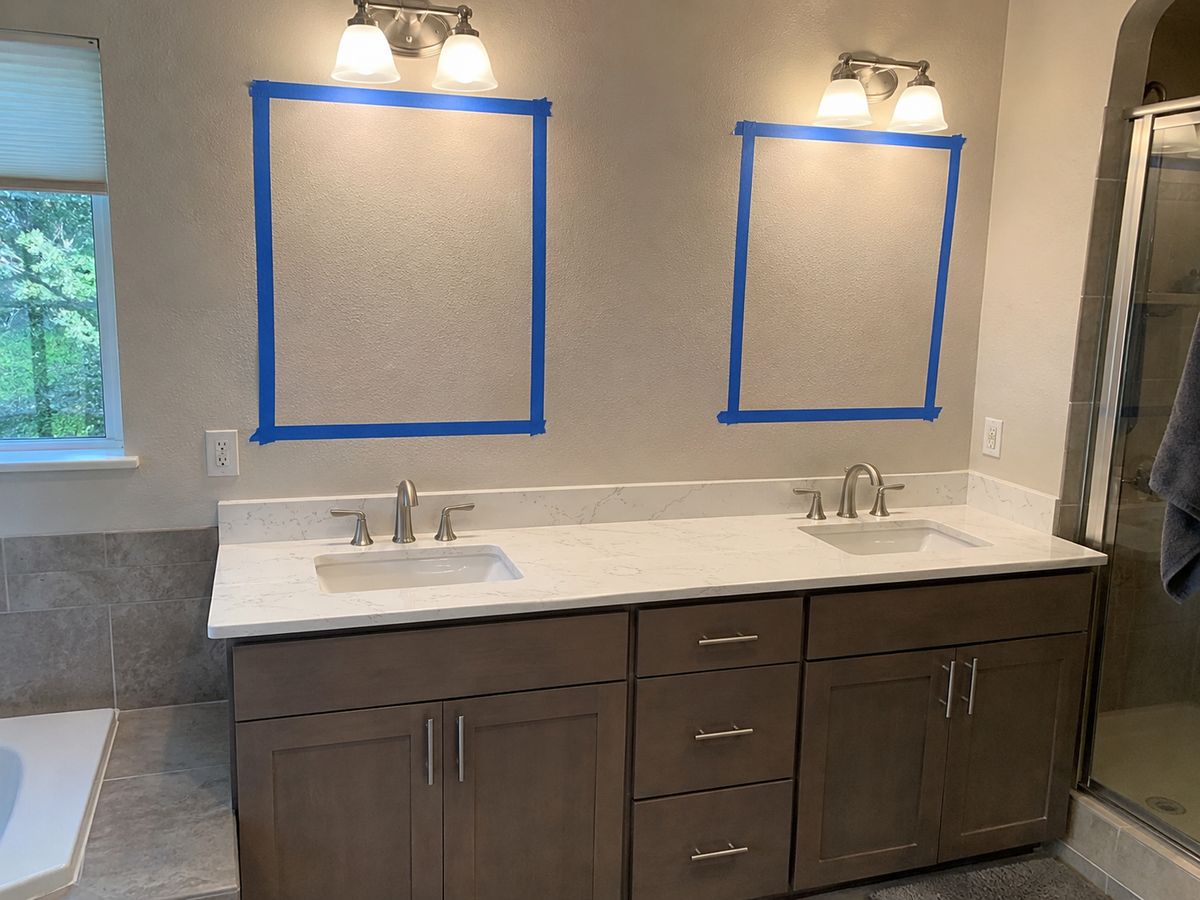
Replacing a bathroom vanity: sizing and clearances, single or double sinks, moving the plumbing, tops, faucets, storage, mirror and light.
Bathroom Vanity Replacement →Accessible Bathroom Remodel
Making a bathroom easier to use: grab bar backing, step-free showers, toilet height, wider doors, turning room, handhelds, light and grip.
Accessible Bathroom Remodel →Bathroom Tile Installation
Tile for bathroom floors and walls: the substrate and waterproofing beneath it, tile types and sizes, layout, slope, grout and floor heat.
Bathroom Tile Installation →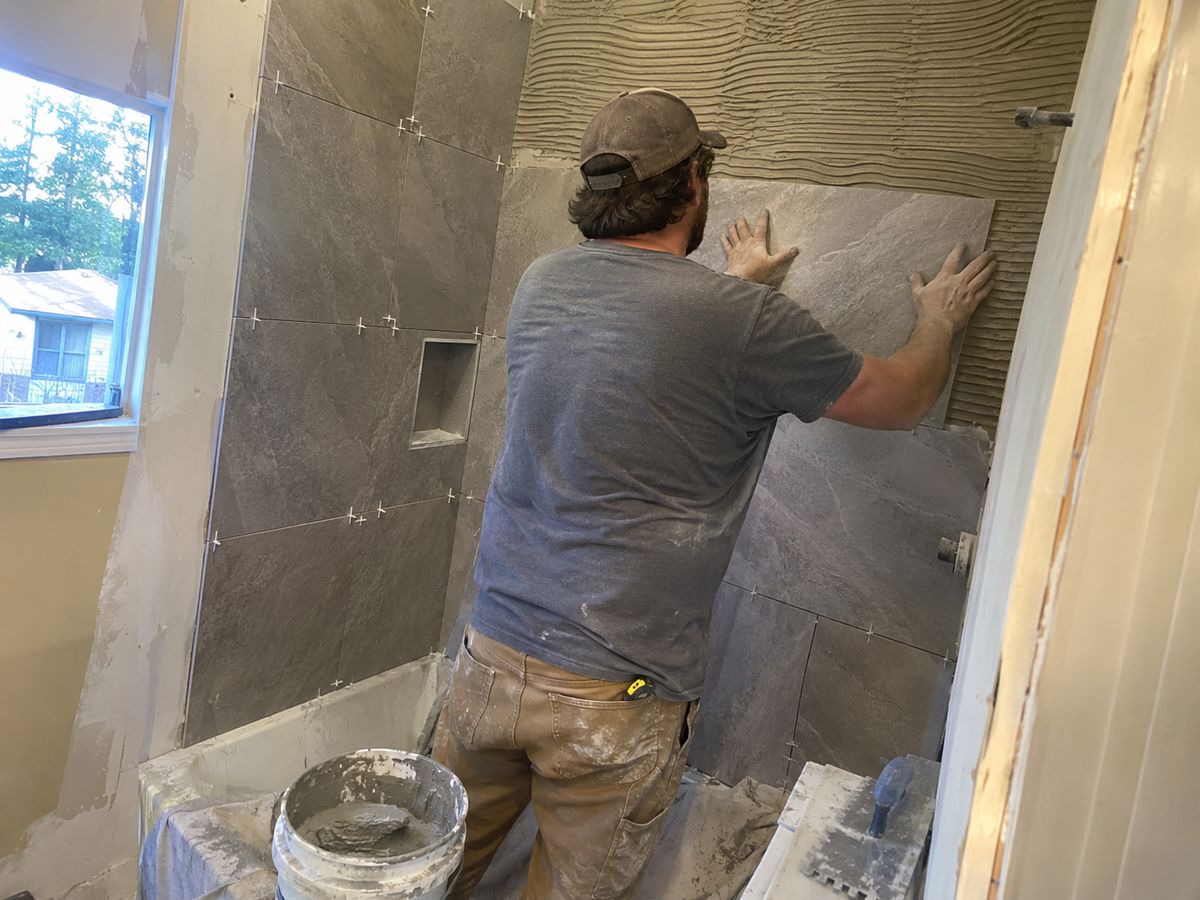
Where This Service Starts and Stops
Bathroom Remodel Beaverton is a referral service that connects homeowners with independent local contractors. It does not employ tradespeople, buy materials, apply for permits or sign construction contracts. What it does is narrow: it takes your request, makes sure the basics are there, such as your area, the room and the problem, and sends it on to a contractor who takes bathroom work near you.
Everything about the job itself sits with that contractor. They decide whether the project suits them, visit the house, write up the scope and the estimate, and set the schedule and payment terms in their own agreement. If something goes wrong with the work, the contractor is the party responsible, which is one more reason to check them carefully.
You can say no to any estimate, and you can collect other bids alongside it. Before anyone starts, look the contractor up through the Oregon Construction Contractors Board's online search. Our notes on checking an Oregon contractor, lower on this page, cover what that search reveals and which other questions are worth asking.
How a Bathroom Remodel Unfolds in a Beaverton Home
Before anything comes out
The first visit sets the direction. The contractor will want to know whether this is the only bathroom in the house, who uses it, and what you would change if you could change just one thing. They will look at the floor around the toilet, hold a tissue up to the fan grille to see whether it pulls, check for an access panel behind the tub valve, and note whether the room sits over a crawl space, a garage or a finished room. From that they can write a scope that names what stays, what goes and what remains uncertain until demolition.
Tear-out and the tub that will not fit through the door
In many Beaverton homes from the 1970s through the 1990s, the tub and shower is a single molded fiberglass unit that was set in place before the walls were framed. It will not come out in one piece. It gets cut up, which is noisy and dusty, and the replacement usually arrives as a multi-piece unit, a tub with a tiled surround, or a fully tiled shower. Ask how dust will be kept out of the rest of the house, especially if the bathroom opens onto a hallway of bedrooms.
Rough-in and inspection
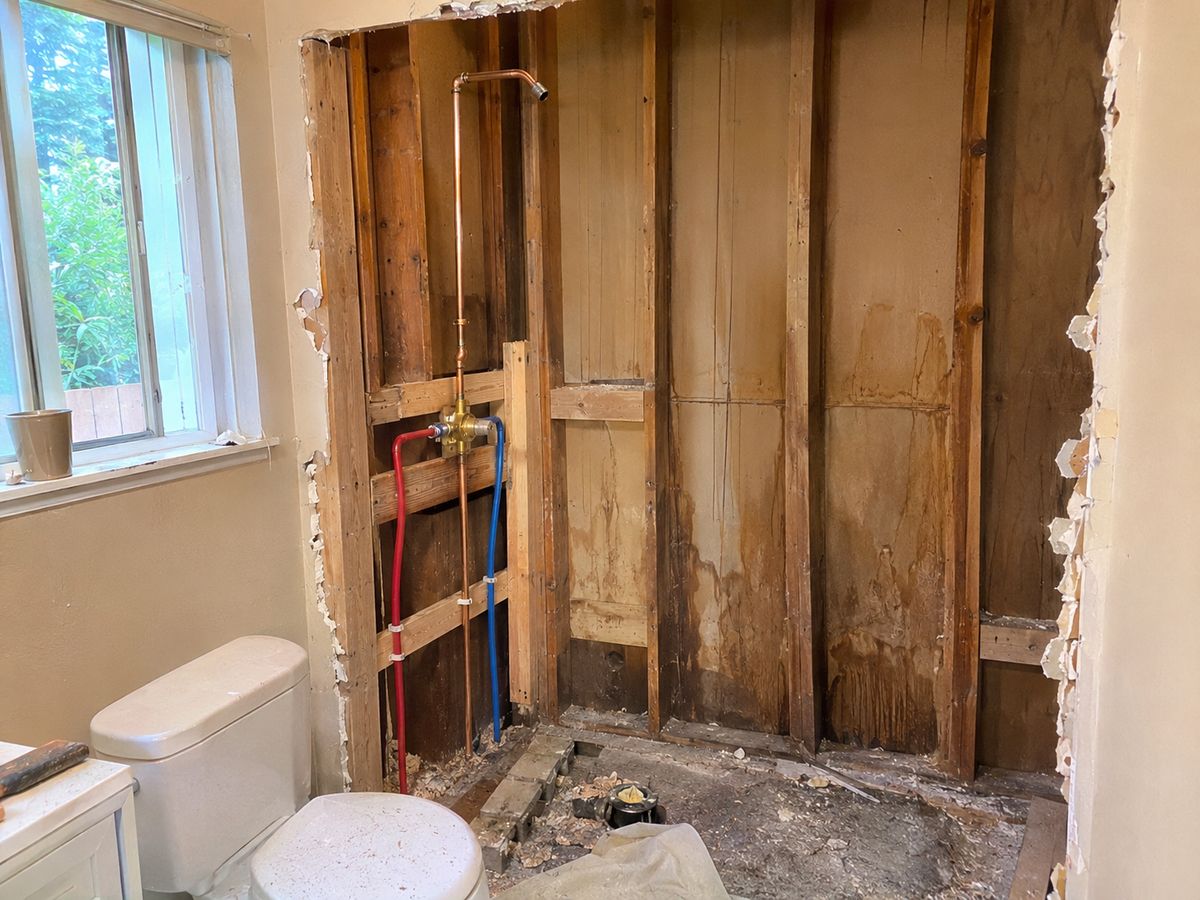
Once the room is open, the plumbing and electrical work begins. The shower valve may be replaced, drains rerouted, and old supply lines swapped if they turn out to be galvanized steel or polybutylene. Electrical work often adds GFCI protection, a dedicated circuit for a heated floor, or new lighting. When the job is under permit, this rough work is inspected before anything covers it, so part of the schedule depends on when the inspector can come.
The wet zone, then the surfaces
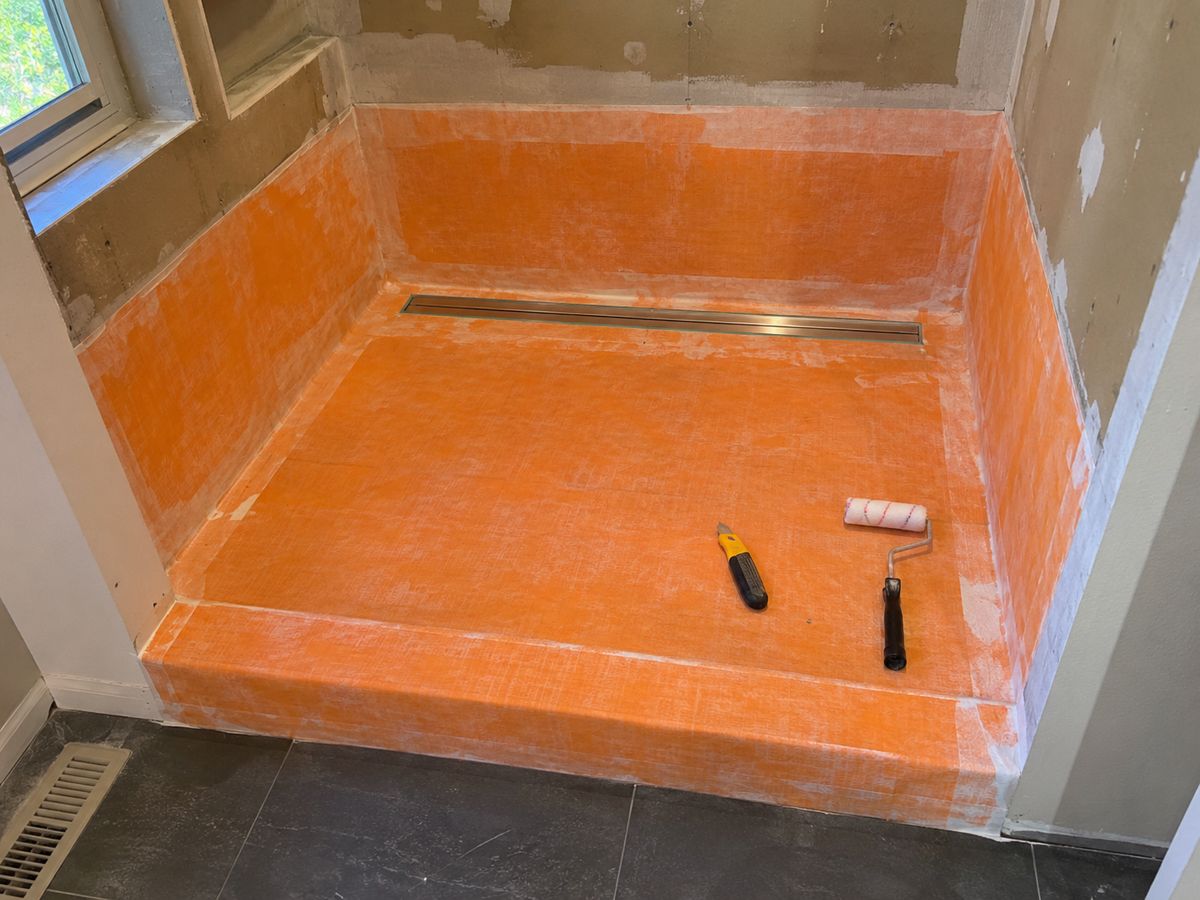
Next comes the part you will never see again: backer board, a waterproof membrane across the shower walls and floor, and a floor sloped toward the drain. After that come tile and grout, then the vanity, toilet, fixtures and glass. When the contractor calls the job finished, walk through it with them, pour a full bucket into the shower to watch it drain, and run the fan with the door closed.
Clues That a Bathroom Needs More Than a Repair
Marks on the ceiling below
In two-story homes the main bathrooms often sit over the kitchen or family room, so the first sign of trouble is a brown ring or a patch of bubbling paint on the ceiling downstairs. The cause can be a failed wax ring under the toilet, a worn tub drain gasket, or water working past the tile. Painting over the stain fixes nothing. Someone needs to find where the water is coming from, and that sometimes means opening the floor or a wall.
Surfaces that will not stay sound
Grout that cracks along the same line again and again, tile that sounds hollow when you tap it, caulk pulling away at the tub, and a floor that flexes near the toilet all point to movement or moisture underneath. A cultured marble vanity top with a crack running out from the drain is common in houses of a certain age, and it rarely takes a repair that lasts.
Air that never clears
If the mirror stays fogged long after a shower, paint peels at the ceiling, and the window sill grows mildew through the winter, the room is not getting rid of its moisture. Original builder fans are often small, loud and poorly ducted, and some end in the attic instead of outside. A better fan can solve that on its own. If the drywall is already soft or stained, the repair gets bigger.
A layout the household has outgrown
Some bathrooms work perfectly well and still need to change. A tub no one has used in years takes up the most useful wall in the room. Stepping over the tub edge becomes a hazard after a knee or hip operation. Two people get ready at one sink every morning. A teenager needs storage the room never had. These reasons deserve a place on paper before the contractor arrives, because they shape the scope more than anything found behind the walls.
Why Two Beaverton Bathroom Estimates Can Look So Different
The permit office for your address
Permit fees and review depend on the scope and on who has jurisdiction. Homes inside Beaverton city limits go through the City of Beaverton. Homes in unincorporated areas such as Aloha, Cedar Mill or West Slope go through Washington County Land Use & Transportation. Tigard, Hillsboro, Tualatin, Sherwood and King City run their own processes. Some projects need only plumbing or electrical permits, others a building permit as well, and the scope decides which.
What is hiding in the walls
Supply pipe tells you a lot about a likely estimate. Galvanized steel in older houses corrodes from the inside and is usually replaced once it is exposed. Polybutylene, a gray plastic pipe used in many homes built from the late 1970s into the 1990s, has a reputation for failing at its fittings, and many contractors recommend replacing any they find. Old shower valves without scald protection are often swapped for pressure balancing or thermostatic valves. None of this is visible until the room is open, so ask how the estimate deals with it.
Moving things and reaching them
Leaving the toilet, tub drain and sink where they are keeps plumbing work modest. Relocating a toilet means moving a large drain line and sometimes working around floor joists, which takes care. An upstairs bathroom can be harder to work on than one over a crawl space, since everything below it is finished living space. A fan duct that has to travel a long way to an outside wall or the roof adds labor too.
Your selections
Tile choices move both material and labor. Small mosaics, patterns and niches take far more cutting and setting time than large plain tiles. A curbless shower calls for a recessed floor and careful drainage. Frameless glass, a heated floor, a wall-hung toilet and custom vanity sizes each cost more than standard options. Electric floor heat may need a new circuit, and an older panel may have no room for one. Ask for an estimate that lists these items separately so you can decide which ones to keep.
Rain, Steam and Beaverton's Housing Stock
A long damp season
From fall into spring, Beaverton weather is mild, gray and wet. Windows stay shut, outdoor air is already damp, and a bathroom with daily showers has little chance to dry out between them. Cold exterior walls and window glass collect condensation, and over a few winters that moisture feeds mildew in corners and rot in sills. The fix starts with ventilation and continues with how the walls and shower are built.
Making the fan do its job
A bathroom fan only helps if the air it moves ends up outside. Ask the contractor where the duct will run and where it will end. It should go to a roof or wall cap, by as short and straight a path as the house allows, and be insulated where it crosses a cold attic so condensation does not run back toward the fan. A humidity sensing switch or a timer keeps the fan going after the shower ends, which is when it matters most.
Three kinds of Beaverton house
Many mid-century houses in and around Central Beaverton have small bathrooms, original tile, and galvanized pipe that has been patched over the decades. The subdivisions that spread across town in the 1970s, 1980s and 1990s, including much of Greenway, Murrayhill and Sexton Mountain, often have fiberglass tub units, builder fans and plastic supply lines worth identifying. Newer homes are tighter and better insulated, which helps with heating but makes good exhaust even more important, because moisture has fewer ways to escape.
Townhomes and stacked bathrooms
Newer townhomes are common in parts of Beaverton, and they bring a different set of questions. Bathrooms often sit above one another or against a neighbor's wall, so noise, fire separation and shared plumbing all matter. A homeowners association may have rules about work hours, contractor parking and changes to exterior vents. Check those before the scope is final so the plan does not have to change halfway through.
Checking an Oregon Contractor Before You Sign
Run the CCB search yourself
Oregon requires contractors who work on homes to be licensed by the Construction Contractors Board, the CCB. The board keeps a free public license search on its website. Enter the business name or license number to find out if the license is current, which bond and insurance the board holds for it, and whether complaints have been filed. Make sure the name on the license matches the name on the estimate. Do this for every contractor you consider, including one who reaches you through this site.
The trades behind the tile
A bathroom remodel often involves a plumber and an electrician, and in Oregon those trades carry their own separate licenses. A general contractor's CCB license does not cover that work by itself. Ask who will do the plumbing and electrical, whether they work for the contractor or are subcontracted, and who is pulling those permits. Write the names down so you can check them too.
Houses built before 1978
Paint in older homes may contain lead, and tearing out walls, trim and door casings can disturb it. If your house predates 1978, ask whether the contractor is certified for lead-safe renovation and how they will contain and clean up the dust. A good share of the mid-century houses around Old Town fall into that group.
Reading the paperwork
A written agreement protects both sides. It should describe the work in plain terms, including the waterproofing method, the fixtures and who supplies them, who handles permits, how changes are approved and priced, and what happens if demolition uncovers rot or failing pipe. Payments should follow progress rather than land mostly at the start. Ask what warranty the contractor offers on labor and how long it runs, and make sure the answer is in the document, not only in conversation. If a dispute ever arises with a licensed contractor, the CCB offers a dispute resolution process, which is one more reason to hire someone whose license is current.
Planning the Room Around the People Who Use It
Tub, shower, or a combination
A standard alcove tub and a roomy walk-in shower take up a similar footprint, so trading one for the other rarely means moving walls. The real question is who uses the room. Households with young children, or anyone who likes a long soak on a cold evening, may want to keep a tub somewhere in the house. If you go shower-only, place the valve near the entry so the water can warm up before you step in.
Warm, bright and safe underfoot
Through a long gray winter, a bathroom that feels cold and dim is a daily irritation. Electric radiant heat under tile takes the chill off the floor and helps it dry faster. It needs its own GFCI protected circuit and a thermostat, so plan it before the floor goes down. Lighting works best in layers, with even light at the mirror, a fixture over the shower rated for wet locations, and a low night light for early hours. Pick floor tile with a slip-resistant finish, since wet porcelain can be slick.
Making it easier for someone with limited mobility
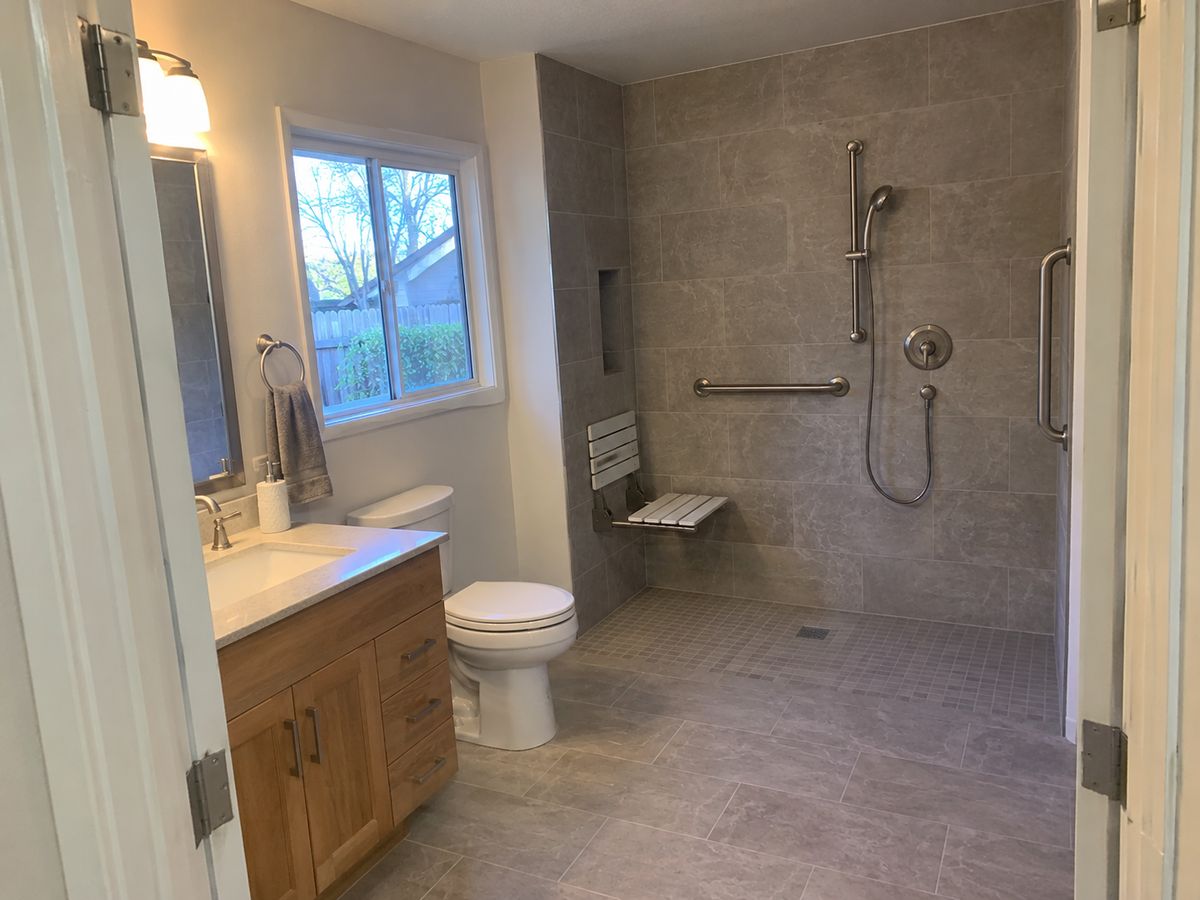
A shower you can roll or walk into without a curb takes planning under the floor. The subfloor is often lowered so water still runs to the drain, and a linear drain along the back wall can help. A door that swings out, or a pocket door, keeps someone who has fallen from blocking the way in. A thermostatic or pressure balancing valve limits sudden temperature swings. Contrasting colors between floor, walls and fixtures help people with weak eyesight, and wood backing inside the walls lets grab bars go exactly where they are needed later.
Storage that matches your routine
Count what lives on the counter now and plan a place for each item. Drawers hold more usable things than a cabinet with a single shelf. A shallow cabinet recessed between studs adds storage without taking floor space. In a shared bathroom, enough counter and drawer space for each person often matters more than a second sink. In a compact hall bath, a wall-hung vanity shows more floor and makes the room feel larger.
Bathroom Remodel Questions in Beaverton
Who visits my house after I send a request?
An independent local contractor who handles bathroom projects near you. Bathroom Remodel Beaverton only passes your request along. The contractor contacts you, sets up a visit, looks at the room and writes the estimate. Any agreement you sign is with that contractor, not with this site.
Can a one-piece fiberglass tub be replaced without opening the walls?
Usually not entirely. One-piece units were set in before the walls were framed, so they are cut out in sections. The replacement is often a multi-piece unit or a tiled surround, and the wall edges around it typically need some repair and new drywall.
My house has gray plastic water pipes. Should they go during the remodel?
Gray plastic supply pipe is often polybutylene, used in many homes built from the late 1970s into the 1990s and known for failing at fittings. With the walls already open, replacing what is exposed is far easier than coming back later. Ask the contractor to identify it at the first visit.
Is a new exhaust fan worth doing before a full remodel?
Often, yes. If the fan is weak, noisy or ducted into the attic, a properly sized fan vented outside can stop mildew and peeling paint now. Ask the contractor to plan the duct route so it still works with the bathroom you build later.
Can heated floors be added to a Beaverton bathroom?
Yes, when the floor is being replaced. Electric mats go under the tile and need a GFCI protected circuit and a thermostat. In an older house, the contractor should check whether the electrical panel has room for the new circuit before you commit to it.
Where We Take Requests
Inside Beaverton, requests come from Central Beaverton and Old Town, from Highland and Greenway, from the Five Oaks area in the north, and from Murrayhill and Sexton Mountain in the south. The housing shifts a good deal between them, from older single-story homes to two-story subdivision houses, so the contractor's visit is where the plan really begins.
Much of the area people call Beaverton lies outside the city. Aloha, Cedar Mill, Bethany, Raleigh Hills, West Slope, Cedar Hills, Garden Home, Metzger, Rock Creek and Reedville are unincorporated, so building permits there come from Washington County Land Use & Transportation rather than the City of Beaverton. A Beaverton mailing address does not settle the question, so check before you plan.
Hillsboro, Tigard, Tualatin, Sherwood and King City are separate cities with their own permit counters, and requests from all five are welcome. Requests from Bull Mountain are welcome too. Every one of them gets a dedicated page here, covering the local housing and what a useful request from that town includes.
How Your Request Works
- Tell us about the projectSend the form or call with what you want to change and where the home is.
- We pass it to a local contractorYour request goes to an independent contractor who works in your area.
- The contractor contacts youThey look at the job, answer your questions and give you their own estimate. You decide whether to go ahead.
Call for a Free Estimate
Tell us which bathroom it is, what bothers you about it and where in the Beaverton area you live, and the request goes to an independent local contractor.